Free shipping for orders from 120 EUR.

Hormonal Acne: Causes, Symptoms, Treatment and Skincare
Hormonal acne (often called adult hormonal acne) is your skin’s way of flagging that something is out of balance. Sometimes it’s hormones or chronic stress, but very often it’s day‑to‑day habits that quietly keep inflammation ticking over.
In this article, I’ll explain what hormonal acne is and what causes hormonal acne. I’ll also show you how to treat hormonal acne with sensible medical support, barrier-first skincare, and lifestyle changes that actually stick.
What is hormonal acne?
Definition and how it develops
In practical terms, hormonal acne is a chronic inflammatory skin condition driven by hormone fluctuations. Androgens get most of the attention, but insulin and the oestrogen–progesterone balance can also influence what happens in the skin.
A simple way to understand why the spots appear is the “4 pillars” model. Hormones can increase sebum production in sebaceous glands, keratinisation can become abnormal and block pores, Cutibacterium acnes can thrive in the low‑oxygen environment, and the end result is deeper inflammation (often painful rather than superficial).
In adult women, the issue is often not “too many hormones in the bloodstream”. It’s that the skin’s receptors can be overly sensitive to normal hormone levels, so blood test results may look fine while your skin still flares.
What does hormonal acne look like?
Where does hormonal acne appear? – The face map
If you remember teenage acne, it often lived in the T‑zone (forehead and nose). Hormonal acne in adults typically clusters lower down, in the “U‑zone” along the jawline, on the chin, around the mouth, and sometimes down the neck.
That lower‑face pattern is exactly why phrases like “hormonal chin acne” and “hormonal acne on chin” are so common in searches. It’s often the first clue that hormones are involved.
If androgen disruption is more significant, breakouts don’t always stay on the face. They can extend to the back and chest. This can happen in men as well, or in people using steroids.
What type of spots does hormonal acne cause?
Hormonal acne rarely stays as tiny surface blemishes. Its hallmark is deeper, sore nodules and subcutaneous cysts, often described as hormonal cystic acne.
These lesions shouldn’t be squeezed, because they sit too deep to “clear” mechanically. Squeezing also increases the risk of slow healing, post‑inflammatory hyperpigmentation (PIH), and scarring.
A frustrating paradox is common: skin can look oily, shiny, and congested on the surface. Underneath, it may feel tight, dehydrated, and uncomfortable, which often suggests a compromised skin barrier.
Is hormonal acne cyclical (and how long does it last)?
For many women, the most telling feature is timing. Flare‑ups often happen in the second half of the menstrual cycle, typically around 3–7 days before a period.
This aligns with normal hormonal shifts. Oestrogen (which often calms the skin) drops, while progesterone rises and can cause follicle openings to swell. In that hormonal landscape, androgens gain relative dominance and push the oil glands into overdrive.
What causes hormonal acne (and what makes it worse)?
The main culprits: androgens, insulin and cortisol
If you’re trying to work out how to fix hormonal acne long‑term, you need to understand the internal drivers rather than only “treat the surface”: androgenic compounds such as testosterone, DHT and DHEA‑S are strongly acne‑promoting because they stimulate oil production and can contribute to a thicker surface layer that blocks pores.
They don’t act alone – insulin and IGF‑1 often amplify the problem, which is why a high‑sugar diet can create a vicious cycle by pushing the ovaries to produce more androgens.
Cortisol matters too: ongoing stress can raise cortisol, which increases systemic inflammation and can stimulate adrenal androgen production, worsening skin at exactly the wrong times.
Underlying conditions and hormonal imbalance acne
Sometimes acne is the visible tip of a deeper issue. PCOS is a common underlying driver in women. Insulin resistance also frequently coexists with persistent breakouts.
Thyroid problems should be on the radar too. Both an underactive thyroid (including Hashimoto’s) and an overactive thyroid can weaken the protective barrier. That can make skin more reactive and breakout‑prone.
Another scenario is rebound acne after stopping hormonal contraception. When natural hormone production returns, it can trigger a temporary but intense surge of androgens.
What makes hormonal acne worse (lifestyle factors)
Genetics and hormones set the stage, but everyday life often decides how severe it becomes: high‑glycaemic diets (refined sugar, processed foods) fuel inflammation, and for some people dairy – particularly skimmed cow’s milk – can be a trigger.
Add poor sleep, chronic stress and smoking (all pro‑inflammatory), and the skin is primed to flare.
Skincare mistakes also compound the problem: harsh cleansing, over‑drying in an attempt to “burn out” spots, squeezing, and incomplete make‑up removal are all reliable ways to make hormonal acne worse.
Hormonal acne treatment: when to see a GP, tests, and treatment options
If you’re searching “how to get rid of hormonal acne” or “how to clear up hormonal acne fast”, it helps to be realistic: faster improvement is possible, but lasting results usually come from a joined‑up plan (medical support + consistent skincare + lifestyle).
If lesions are deep and painful, leaving scars/marks, or the situation hasn’t improved after 2–3 months of careful skincare and diet (or it’s clearly getting worse), it’s sensible to speak to a GP and consider a dermatologist plus a gynaecologist‑endocrinologist approach.
If acne comes with irregular periods, significant hair loss, or hirsutism, don’t try to “balance hormones for acne” with guesswork – that combination warrants proper assessment.
Hormonal and metabolic blood tests (commonly used)
Testing is a map that helps clinicians choose the right route; many specialists recommend doing key hormones between day 2 and 5 of the cycle (morning, fasted), with progesterone typically checked around day 21 or about 7 days after ovulation.
Common tests include:
- total and free testosterone,
- DHEA‑S, SHBG, oestradiol and progesterone;
- LH, FSH and prolactin; thyroid markers (TSH, fT3, fT4, anti‑TPO);
- metabolic markers such as fasting glucose and fasting insulin to calculate HOMA‑IR and assess insulin resistance.
A non-negotiable safety note: don’t interpret results using online reference ranges in isolation – only a clinician can place numbers in the context of symptoms, cycle timing and medical history.
How to treat hormonal acne?
Modern treatment usually combines topical control (to reduce inflammation and prevent scarring) with systemic support when needed: retinoids such as adapalene or tretinoin are widely used to normalise cell turnover, and benzoyl peroxide (BPO) plus azelaic acid can help with bacteria and inflammation.
Doctors may prescribe tetracycline‑class antibiotics for their anti‑inflammatory effect (typically as time‑limited courses rather than indefinitely), and for adult women hormonal therapy can be very effective – selected oral contraceptives or spironolactone, which blocks androgen receptors in the skin.
For severe, treatment‑resistant cases, isotretinoin may be considered; it can reduce sebaceous gland activity long‑term, but it requires close medical supervision throughout.
Best skincare for hormonal acne
When people ask how to stop hormonal acne, they often reach for aggressive products and harsh routines. The problem is that acne‑prone skin is often already irritated and has a compromised hydrolipidic barrier. Stripping it can trigger more oil production as the skin tries to protect itself.
A calmer, more effective approach is “less is more”. Aim to reduce inflammation first. Hydrate properly. Regulate gently, rather than declaring war on your face.
Step 1 — Cleansing (the foundation)
Skip bar soap, harsh gel cleansers (especially those with SLS/SLES), and sonic cleansing brushes. They can irritate reactive skin. They can also spread bacteria across the face.
Look for a very gentle cleanser based on non‑ionic surfactants. If INCI lists feel overwhelming, baby/children’s cleansers can be a practical shortcut. They’re designed for sensitive skin.
If your budget allows, consider investing in a professional Smoothing Cleanser. It’s pricier, but the goal is effective cleansing without disrupting the barrier. Cleanse twice daily (morning and evening). Always cleanse after exercise to reduce sebum oxidation on the skin’s surface.
Step 2 — Toning (optional, supportive)
In older routines, toner was used to restore pH after soap; with a modern gentle cleanser at physiological pH, toner is no longer essential, but it can be a helpful support step if chosen well.
If you use one, gluconolactone (a PHA) is a good example of an ingredient that can hydrate, soothe redness and gently support keratinisation with less irritation risk than stronger acids.
Avoid alcohol-based formulas (dehydrating and damaging), and be cautious with high concentrations of actives – piling them on is a common reason hormonal acne looks worse, not better.
Step 3 — Sealing the skin (lipids + minimalism)
This step is about rebuilding the occlusive layer and reducing transepidermal water loss (TEWL). That gives the skin space to repair, instead of constantly overreacting.
You don’t need complex, multi‑ingredient formulas for this. Choose a short, transparent ingredient list. Keep it fragrance‑free and avoid potential allergens where possible. Ideally, go for a hypoallergenic formula. Look for biocompatible lipids that the skin can recognise and use.
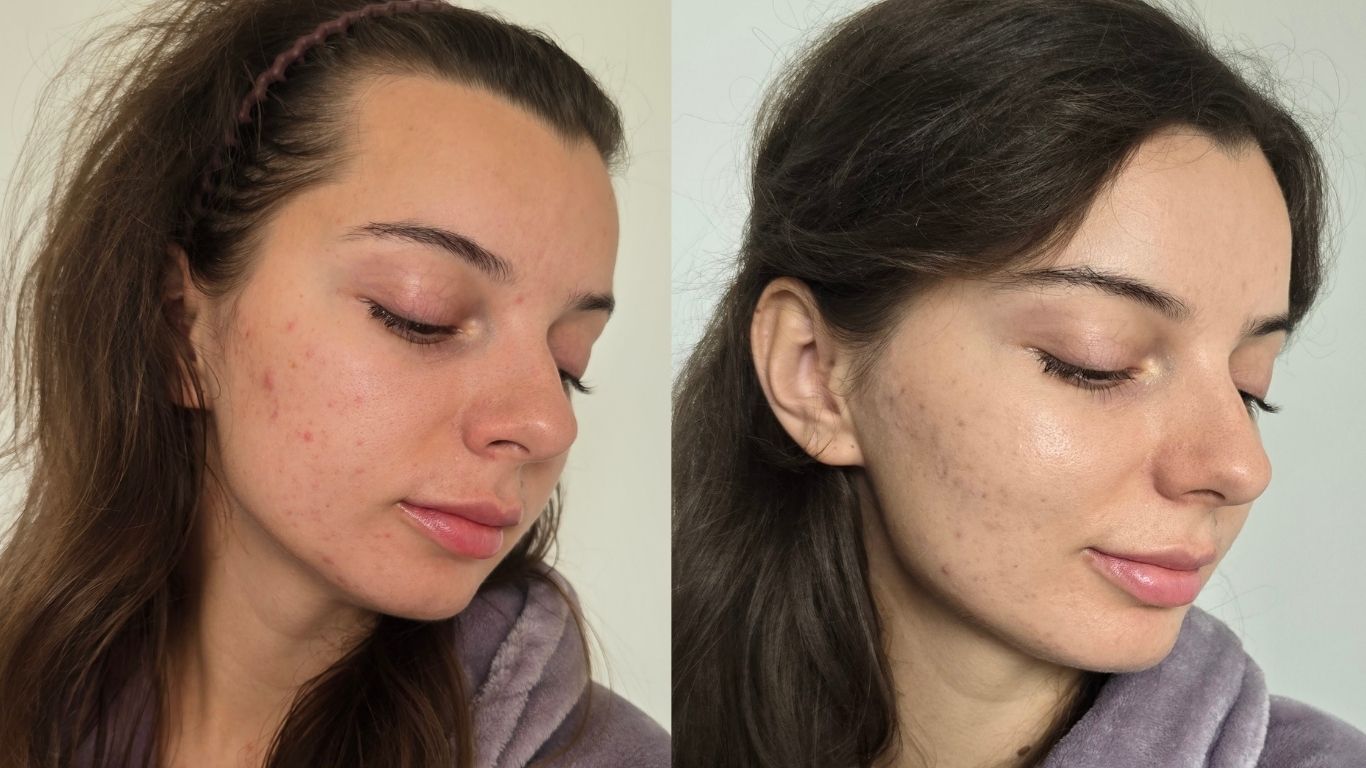
If you’d like help choosing products, feel free to get in touch. Below is a real‑world example from my client Aneta, who struggles with hormonal acne. I encouraged her to try PURE RAW RICH skincare. We introduced only two products – the Cleanser and the Cream – for four weeks. Over time, her skin looked calmer and more even, with fewer new breakouts.
Step 4 — SPF (non-negotiable)
SPF 30–50 every day is a biological necessity, and cloudy British skies are not an excuse. The “summer glow” effect can be misleading. UV can temporarily suppress inflammation and dry out spots. But the skin often responds with hyperkeratinisation (thickening of the surface layer). That can block pores and trigger a rebound breakout weeks later.
UV also stimulates melanocytes, which can lock in PIH so red marks turn into stubborn dark patches; and because many acne treatments (retinoids, acids) increase photosensitivity, daily SPF reduces the risk of irritation and supports safer healing.
Hormonal acne diet: what helps, what to avoid
What you eat won’t replace medical care when it’s needed, but it can meaningfully influence hormones and inflammation; in practice, a low‑glycaemic approach helps many people by reducing sharp blood sugar spikes and stabilising insulin signalling.
Focus on antioxidant‑rich, anti‑inflammatory foods (fresh vegetables, berries, green tea), omega‑3 sources (oily fish, walnuts, flaxseed), plus zinc and selenium (pumpkin seeds, Brazil nuts), and aim for around 2 litres of fluids daily; herbal teas such as viola tricolour (wild pansy), chamomile or peppermint can be a gentle add‑on.
On the “makes it worse” side, refined sugar and ultra‑processed foods are common drivers, and dairy – especially cow’s milk and particularly skimmed milk – can be problematic for some people; if you suspect that’s you, a full 4–6 week dairy break is a practical trial.
It’s also worth limiting very spicy foods and alcohol if you notice they worsen redness or inflammation, as both can aggravate flare‑ups in reactive skin.
A note on “natural” treatment and supplements
If you’re looking up “how to treat hormonal acne naturally at home”, keep the goal realistic. You can support your skin at home and reduce common triggers. However, deep hormonal drivers often need medical assessment. Harsh DIY routines usually backfire. If you’re searching for hormonal acne supplements or the best vitamins for hormonal acne, take a targeted approach. Ideally, base it on symptoms and blood tests. Vitamin D3, B vitamins (especially B3 and B5), and omega‑3s are commonly discussed because they support immunity and help with inflammation.
Hormonal acne is rarely solved by one “miracle” product. It usually improves when you get the order right: diagnosis first, then holistic treatment. Gentle skincare and a steady lifestyle plan support that process and help prevent repeat flare‑ups. Treating hormonal acne is a marathon, not a sprint. The most reliable results come from patience and consistency, not fighting your skin.
Aleksandra
FAQ — Frequently Asked Questions
How do I know if my acne is hormonal or bacterial?
If spots appear mainly on the chin, jawline and neck, hormonal acne is more likely. These breakouts often come back in a predictable pattern, especially in the days before your period. They also tend to be deep, painful nodules rather than simple blackheads.
Bacterial acne, by contrast, is often more widespread and less tied to a monthly cycle. It can also respond more quickly to topical antibacterial treatments.
Will hormonal acne go away on its own?
Generally, no.
What should you avoid with hormonal acne?
1. Don’t squeeze spots – it spreads bacteria and leads to deeper scarring
2. Don’t over-dry your skin – stripped skin heals more slowly
3. Don’t use lots of different active products at once – your skin doesn’t respond well to being overwhelmed, and it will look worse
What vitamins are good for hormonal acne?
Targeted supplementation, ideally guided by blood test results: Vitamin D3 (supports skin immunity), B vitamins (particularly B3 and B5), and omega-3 fatty acids for their anti-inflammatory action.
Hormonal acne during pregnancy – what’s safe?
Azelaic acid and niacinamide – both act gently and can be used year-round.