Free shipping in the EU for orders from 150 EUR.

Skin Feels Tight After Washing? Mistakes and Fixes
Published: 20.12.2025 | Updated: 22.10.2026 | Reading time approx. 11 min.
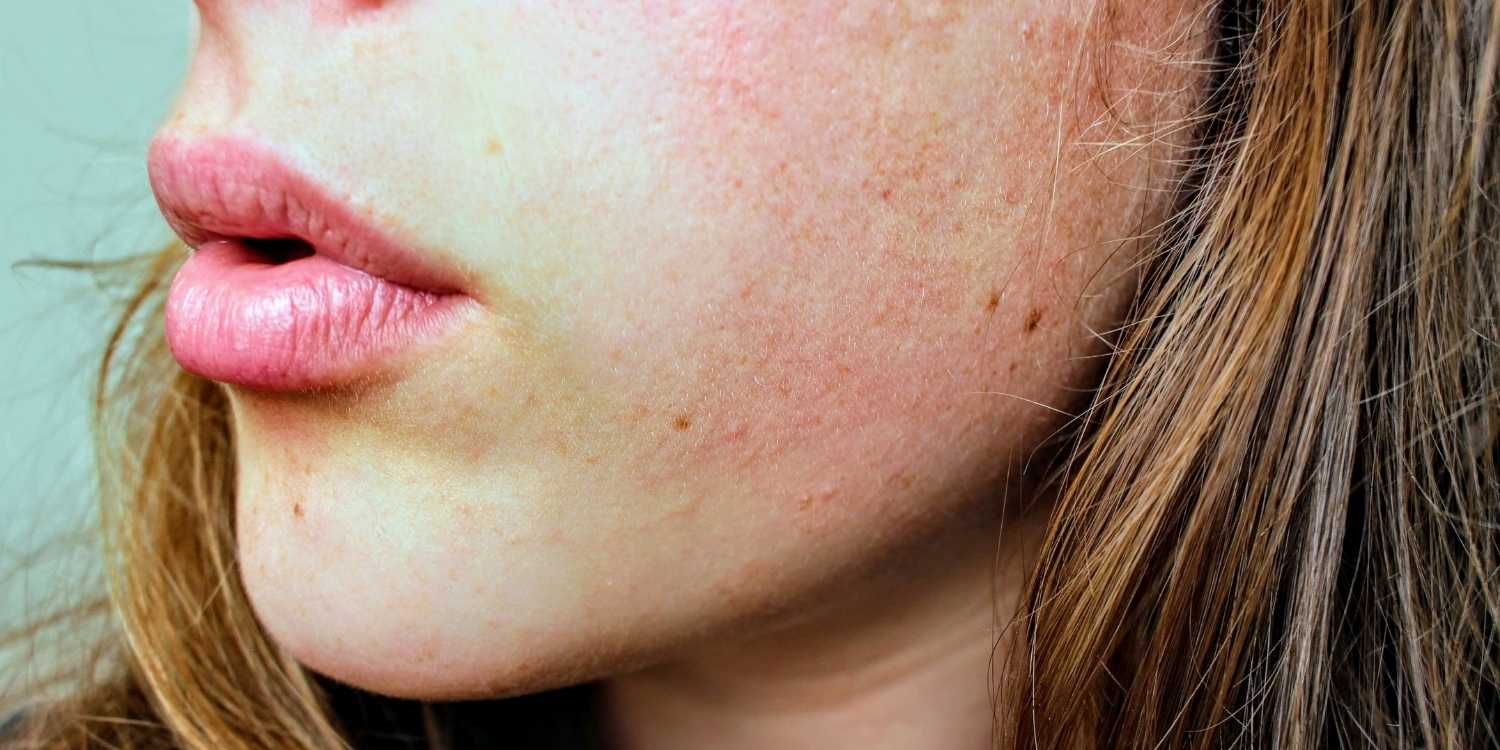
If your skin feels tight after washing, it isn’t a sign that it’s “squeaky clean”. Healthy skin should feel soft and comfortable after cleansing. Tightness, stinging or dry skin after washing your face mean the wash has taken away more than just dirt.
Cleansing removes sebum, dead skin cells and pollution – but it can also strip the lipids of the skin’s outer layer: ceramides, cholesterol and fatty acids. Together they form the hydrolipid barrier. Picture skin cells as bricks and these lipids as the mortar that keeps water in. Harsh cleansing agents (surfactants), hot water and rubbing with a towel all loosen that mortar, so more water escapes from the skin – a process called transepidermal water loss (TEWL).
Healthy skin repairs its barrier on its own: the cells of the epidermis produce new lipids, and after a single harsh wash the barrier usually recovers within a few days. But when the same mistake is repeated every day, the damage adds up and recovery can take weeks. So if your face feels dry after cleansing day after day, it’s rarely just your skin type – far more often, it’s your cleansing habits.
Have a question about your own skin? Scroll to the end of this article – I’m happy to advise you by email.
Why does my face feel tight and sting after washing?
Tightness and stinging after washing usually come from what you wash with, the water you use – or both.
Which cleansing agents strip your skin
The main culprits are strong anionic surfactants, above all sodium lauryl sulphate (INCI: Sodium Lauryl Sulfate, SLS). They don’t just lift dirt and sebum: they bind to the proteins of the outer skin layer and pull out the lipids between skin cells. A weakened barrier lets irritants reach the nerve endings in the skin more easily – and they react with stinging, burning and a feeling of tightness. Sensitive skin reacts faster and more strongly.
Sodium laureth sulphate (INCI: Sodium Laureth Sulfate, SLES) is a related but noticeably milder ingredient. Still, in a strong, high-foaming formula it can leave dry skin feeling tight too. Cationic surfactants, such as cetrimonium chloride (INCI: Cetrimonium Chloride), are rare in face washes, but they also bind to the skin surface and can irritate it.
Fragrance can add to the problem. Common fragrance allergens such as limonene and linalool (they appear by name on the ingredient list) may irritate skin whose barrier is already weakened – especially once they oxidise on contact with air.
Hard water and tight skin
Water itself matters too. Hard water contains a lot of calcium and magnesium ions. Calcium binds to surfactants such as SLS, and more of the cleanser stays on your skin after rinsing. In a study on people with eczema and healthy volunteers, washing with hard water increased the amount of SLS left on the skin, which in turn raised water loss and irritation; softening the water reduced these effects (Danby et al., Journal of Investigative Dermatology, 2018). A cleanser containing a chelating agent such as sodium phytate (INCI: Sodium Phytate) binds some of the calcium and magnesium and helps to limit this effect. If you live in a hard-water area, a gentle cleanser that rinses off easily makes an even bigger difference.
Tight, dry or dehydrated?
These three words are often used interchangeably, but they describe different things:
- Dry skin is short of lipids. It produces too little of its own oils, so it often feels rough and can flake.
- Dehydrated skin is short of water. Any skin type can be dehydrated – oily skin included.
- Tightness isn’t a skin type at all, but a sensation: a signal that your skin has just lost lipids, water or both.
That’s why dry, combination and oily skin can all feel tight after washing. What they share is rarely the skin type – far more often, it’s the way they’re cleansed.
That’s also why drinking more water won’t stop your skin feeling tight after washing. Staying hydrated matters: according to a review of studies, drinking more may slightly improve skin hydration, especially in people who drank little to begin with – but no clear effect was seen on water loss through the skin barrier (Akdeniz et al., Skin Research and Technology, 2018). Here, though, the tightness comes from the loss of lipids and water from the surface of the stratum corneum, caused by washing itself. What really helps is changing the way you wash your face.
Dry skin mistakes that make tightness worse
These are the most common dry skin care mistakes I see – and each of them makes post-wash tightness worse:
- Washing with hot water instead of lukewarm. Heat makes surfactants more aggressive. In one study, a detergent solution at 40°C increased water loss through the skin significantly more than the same solution at 20°C, while plain water caused no change (Ohlenschlaeger et al., Acta Dermato-Venereologica). In another, ten minutes in hot water (around 41°C) raised water loss and redness far more than cold water did (Herrero-Fernandez et al., Journal of Clinical Medicine, 2022).
- Using cleansers with SLS. Sodium lauryl sulphate is one of the harshest surfactants in everyday cosmetics: it strips lipids from between skin cells even at low concentrations. SLES is milder, but in a strong, high-foaming formula it can still be too much for dry skin.
- Washing with soap. Soap is alkaline, and it raises the skin’s pH more than a gentle, pH-balanced cleanser. Soap-washed skin also shows more redness after repeated washing (Korting et al., Acta Dermato-Venereologica; Voegeli, Journal of Wound, Ostomy and Continence Nursing, 2008).
- Double cleansing. Every wash raises water loss through the skin, and so does rubbing it with a towel – the effect adds up (Voegeli, 2008). That’s why I don’t recommend washing your face twice in a row, with a gel and then an emulsion or balm. Wash your face morning and evening – but once each time. If you wear heavy make-up, dissolve the excess with micellar water first, then wash your face once, gently. In my experience, multi-step cleansing makes skin look better only for a moment – and then often worse.
- Skipping a moisturiser with lipids. After washing, the skin needs lipids it can use to rebuild its barrier. Linoleic acid (an omega-6 fatty acid) is one of the building blocks of the skin’s own ceramides – when it’s missing, the outer layer struggles to repair itself.
- Applying a fragranced cream to irritated skin. Fragrance allergens such as limonene, linalool and eugenol can keep irritated skin inflamed and slow down its recovery.
These habits create a vicious circle – and it doesn’t always look the same.
Why oily skin can feel tight after washing
Skin responds to being stripped in different ways, and genetics plays a big part. Some skin quickly rebuilds its surface oil and feels shiny again within hours, so it looks oily but is in fact stripped and dehydrated. Skin that can’t replenish its lipids fast enough stays tight, dry and reactive. That’s why oily and dry skin, so different on the surface, often share the same cause: being dried out too aggressively.

How to Repair Your Skin Barrier Step by Step: A Plan That Calms Skin and Stops Relapse
How to repair your skin barrier step by step: gentle cleansing, all three barrier lipids, daily SPF – and a safe way back to acids and retinol.
Repairing your skin barrier means simplifying your routine for a while: gentle cleansing, a humectant on damp skin, a moisturiser with all three barrier lipids (ceramides, cholesterol, fatty acids) and daily SPF.
Signs of a damaged skin barrier
The typical signs of a damaged skin barrier are tightness after washing, stinging and greater sensitivity to cold or wind. A weakened barrier also renews itself more slowly: dead skin cells don’t shed evenly, they build up on the surface and scatter light – so the complexion looks dull and greyish instead of fresh.
A damaged barrier lets irritants and microbes through more easily. Skin gets irritated faster, and some people notice more spots or small bumps. Other signs include an oily T-zone with dry skin on the rest of the face, frequent redness and slower recovery after shaving or exfoliation. Without a change in habits, all of this tends to get worse in winter.
What happens beneath the surface is well documented in the lab. In a study on human skin samples, prolonged exposure to SLS reduced the production of filaggrin – a protein the barrier depends on – thinned the outer layer of the skin and switched on inflammatory signals (Barthe et al., Frontiers in Medicine, 2024). A one-minute wash is far gentler than that experiment, but repeated every day, it pushes your skin in the same direction.
When to see a doctor
If stinging, redness or flaking don’t settle within two to three weeks of gentler cleansing – or if you notice weeping patches, cracks, an itchy rash or swelling – speak to a doctor, pharmacist or dermatologist. These can be signs of eczema, contact dermatitis or rosacea, which need a proper diagnosis.
Source: https://pmc.ncbi.nlm.nih.gov/articles/PMC11664247/
How to wash your face without drying it out
If you have dry skin, wash your face with lukewarm water, around 30–35°C. Hot water makes surfactants harsher and increases water loss through the skin. Choose cleansers based on mild, non-ionic surfactants, such as decyl glucoside (INCI: Decyl Glucoside), coco-glucoside (INCI: Coco-Glucoside) or caprylyl/capryl glucoside (INCI: Caprylyl/Capryl Glucoside). They don’t bind to skin proteins the way SLS does and remove far fewer lipids from the barrier. Glucosides rarely cause allergies, but the risk isn’t zero – people with a damaged skin barrier should keep this in mind and stop using a product if their skin reacts.
Wash your face twice a day – in the morning and in the evening – once each time, for about 60 seconds. Don’t scrub. Rinse with lukewarm or cool water: hot water washes away more of the barrier’s lipids, and your skin ends up rough and tight.
How to dry your face after washing
Dry your face by patting it several times with a soft, clean towel until the water is absorbed. Don’t rub – friction from the towel increases water loss through the skin (TEWL). Then, within a minute or so, while your skin is still slightly damp, apply a moisturiser rich in lipids. It reduces water loss and gives the skin what it needs to rebuild its barrier. In an instrumental test on dry skin, Cream reduced water loss through the skin by an average of 35% two hours after application and by 15% after 24 hours (measured on body skin, in 10 women).
Source: https://pubmed.ncbi.nlm.nih.gov/18199943/
Gentle cleansing for dry, sensitive skin
Sensitive skin needs a very gentle cleanser: one whose formula leaves out anything that could even potentially irritate, yet still cleans the skin properly. That balance is at the heart of my PURE/RAW/RICH philosophy. Look for a sulphate-free cleanser with no declared fragrance allergens, based on mild, non-ionic surfactants or oils, with emollients that put lipids back into the skin.
That’s how I formulated Smoothing Cleanser – a gentle face wash for dry, sensitive skin that cleans without disrupting the hydrolipid barrier. It’s a thick, rich paste that you apply to dry skin and then rinse off. Plant oils dissolve make-up, sebum and dirt, and mild non-ionic surfactants (polyglyceryl esters) help rinse it all away. Fine particles of rice starch (under 100 μm) and bamboo (under 50 μm) polish the skin surface. The rice particles are round, with no sharp edges, so they don’t scrub or scratch the skin – they lift dead cells gently. And because the paste is oily, it glides over the skin without friction. It contains no declared fragrance allergens and only a mild preservative.
You can use Smoothing Cleanser every day, morning and evening. If your skin is very irritated or painful, use it less often or switch to Gentle Gel for a while – a mild cleansing gel with only non-ionic surfactants, prebiotics and sodium phytate (INCI: Sodium Phytate), which binds the calcium and magnesium ions from hard water. Whichever you choose, never wash with hot water.
In an instrumental test, 10 people with dry skin (7 women and 3 men aged 31–59) used Smoothing Cleanser twice a day for 7 days – massaged onto dry skin for a minute and rinsed off with lukewarm water – each time followed by Cream applied to slightly damp skin. On average, skin hydration rose by 15.1%, smoothness by 13.9% and skin brightness by 13.7%.

Discover Pure Raw Rich skincare:

Gentle Gel
500 ml
Gentle cleansing with prebiotics and a chelating agent
Smoothing Cleanser
50 ml
Hydrates, softens and smooths

Cream
50 ml
Supports your skin’s natural regeneration

Serum + Q10
30 ml
Antioxidant serum with omega fatty acids and coenzyme Q10
Aleksandra Kubas-Maliszewska
Free email consultation
Not sure what’s making your skin feel tight after washing? Join the Pure Raw Rich newsletter and get a free email consultation with me.
I’m a cosmetic scientist and the founder of Pure Raw Rich.
Frequently asked questions (FAQ)
Is it normal for skin to feel tight after washing?
No. Healthy skin should feel soft and comfortable after cleansing. Tightness means your cleanser, the water or your technique has removed too many lipids from the skin barrier.
Why does my face sting after washing?
Stinging usually comes from harsh anionic surfactants such as SLS, hard water that leaves more cleanser on the skin, and fragrance allergens such as limonene and linalool. All of them are harder on skin whose barrier is already weakened.
Why does my skin feel tight after a shower?
A shower combines everything that dries skin out: hot water, a long time under it, and often a body wash used on the face. Wash your face separately, with lukewarm water and a gentle cleanser, and apply your moisturiser straight after.
How should I wash my face if I have dry skin?
Wash it morning and evening, once each time, for about 60 seconds, with lukewarm water (around 30–35°C) and a cleanser based on mild, non-ionic surfactants. Dry it gently, without vigorous rubbing, and apply a moisturiser rich in lipids while your skin is still slightly damp.
What are the signs of a damaged skin barrier?
Tightness and stinging after washing, greater sensitivity to cold and wind, a dull, greyish complexion, frequent redness, flaking and slower recovery after shaving or exfoliation. Some people also get an oily T-zone with dry skin elsewhere.
Which dry skin care mistakes make tightness worse?
Hot water, cleansers with SLS, soap, double cleansing, skipping a moisturiser with lipids and applying fragranced creams to irritated skin.
Why does my skin still feel tight after moisturiser?
If tightness comes back even after a good moisturiser, the problem usually starts earlier – with a cleanser that strips too much. Switching to a gentler cleanser often helps more than a heavier cream.
How does Smoothing Cleanser work?
It’s a thick, oily paste: plant oils dissolve make-up and sebum, mild non-ionic surfactants help rinse them off, and fine, round particles of rice starch and bamboo polish the skin without scrubbing. It contains no declared fragrance allergens and cleanses without disrupting the hydrolipid barrier.
How long does it take for the skin barrier to recover?
After a single harsh wash, usually a few days. If the damage has built up over weeks, recovery can take several weeks of gentle cleansing and a moisturiser rich in lipids.