Free shipping for orders from 150 EUR.

Rosacea Skincare: A Complete Routine Guide for Redness-Prone Skin
Rosacea — also known as acne rosacea, or sometimes called rosacea-type acne — is a chronic inflammatory skin condition that affects the face, usually settling across the nose, chin and cheeks. The redness is often accompanied by small, visible blood vessels just beneath the skin’s surface, known as “spider veins” or telangiectasia. Over time, bumps and pustules can develop, which are sometimes mistaken for acne breakouts. Symptoms tend to flare and then ease off, and because of this back-and-forth pattern, the condition needs a proper dermatologist’s diagnosis — trying to treat it yourself at home usually only makes things worse.
In this guide, you’ll learn how to recognise the earliest signs, how to choose skincare that won’t aggravate your skin, and how to treat rosacea effectively enough to enjoy long periods of remission.
Who Gets Rosacea? Understanding Adult-Onset Cases
Rosacea is thought to affect around 10% of adults aged 30 to 50 — the age bracket where it most commonly develops. It tends to show up most in people with fair skin, usually skin types I or II, with light eyes (blue or green) and blonde or red hair. Women are diagnosed more often than men, though when men do get rosacea, it tends to run a more severe course.
It’s worth knowing that a predisposition to rosacea is largely inherited — if rosacea runs in your family, your own risk of developing it is higher.
The Most Common Symptoms of Rosacea
These changes tend to concentrate around the nose, cheeks and chin. The key symptoms to look out for:
- Persistent erythema (redness) – at first this comes and goes, often triggered by stress, but over time it settles in for good.
- Telangiectasia (“spider veins”) – clearly visible, dilated blood vessels just beneath the skin.
- Papules and pustules – inflamed bumps that resemble acne, but without the blackheads.
- Heightened sensitivity – ongoing stinging, swelling, and that tight, pulled feeling across the skin.
Rhinophyma: When the Nose Thickens
In more advanced stages, small nodules can develop, sometimes leading to tissue scarring. One of the most distressing and visible signs of advanced rosacea is rhinophyma — a thickening and enlargement of the nose.
This change mostly affects men and leads to the nose becoming enlarged and misshapen, which can take a real toll on both appearance and day-to-day confidence. With rhinophyma, the sebaceous glands become enlarged and fibrous, causing the skin on the nose to thicken unevenly.
Ocular Rosacea
Rosacea can affect the eyes too — something that’s often mistaken for allergies or chronic conjunctivitis. Eye problems can show up before any changes appear on the skin, alongside them, or only afterwards. Signs include a gritty, “sand-in-the-eyes” feeling along with burning and itching; excessive watering and sensitivity to light; red, irritated eyelid margins with visible spider veins in the eye itself; and recurring styes or chalazia.
Rosacea vs Acne: How Are They Different?
Rosacea often gets mistaken for common acne (acne vulgaris) — the kind most of us battled as teenagers — but the two aren’t the same condition. Acne vulgaris usually shows up during puberty and is driven by overactive sebaceous glands: plenty of papules and pustules, yes, but the real hallmark is comedones — blackheads and whiteheads — which rosacea simply doesn’t produce. This distinction matters more than it might seem, because treatments and cosmetics formulated for teenage acne can actually aggravate rosacea rather than help it. That’s exactly why getting a proper diagnosis from a dermatologist first is so essential.
Factors That Trigger and Worsen Rosacea Symptoms
Rosacea-prone skin reacts to even the smallest stressor, so it’s worth keeping these triggers to a minimum if you want your skincare or treatment to actually work. The main culprits:
- Temperature and weather – sun, both heat and cold (a scorching day or a frosty one), sudden temperature shifts, wind, air conditioning, and dry air.
- Alcohol and diet – red wine in particular, very hot drinks, and spicy food.
- Stress and emotion – stress, strong emotions, nervousness or embarrassment can flip the skin’s nervous system into overdrive almost instantly, triggering a flush.
- Skincare missteps – your skin won’t tolerate allergens, SLES, drying alcohol-based formulas, exfoliants (even fine-grain ones), any kind of rubbing, or hot water.
- Medication and health factors – topical steroids, vasodilator medications, and hormonal changes (menopause, pregnancy) can all make symptoms worse.
Medical Treatment and In-Clinic Procedures for Rosacea
In the earliest stage (Stage I), treatment mainly comes down to eliminating irritants and switching to a gentler skincare routine. If you notice recurring facial redness, a burning sensation, or visible spider veins, it’s worth seeing a dermatologist for a proper assessment. Once the skin changes become more advanced, topical treatments come into play — metronidazole, azelaic acid, ivermectin — and in some cases oral antibiotics are needed as well.
For patients who don’t respond to any of these, isotretinoin may be prescribed.
Permanent vascular changes can be reduced through aesthetic medicine treatments such as laser therapy and intense pulsed light (IPL). Both are effective at reducing visible blood vessels and redness — laser treatments work directly on the affected vessels, sealing them and calming the redness. These light-based treatments are painless, though they can come with side effects such as temporary redness or a tight, pulled feeling on the skin.
Treatment should always be prescribed by a doctor, and there are several contraindications worth knowing about, including pregnancy and breastfeeding, vitiligo, cardiovascular disease, epilepsy, and a tendency to form keloid scars.
In-Clinic Treatments for Rhinophyma
For patients with tissue overgrowth around the nose (rhinophyma), treatment options include surgical procedures — full-thickness skin excision with flap reconstruction or skin grafting — alongside dermabrasion, cryosurgery, electrocoagulation, and CO2 laser therapy.
What You Should Never Do With Rosacea
Avoid the following:
- Acid-based exfoliating treatments – AHA, trichloroacetic acid, and salicylic acid peels.
- Heat-based treatments – saunas, hot baths, and other heat therapies.
- Mechanical peels – both grainy scrubs and dermabrasion are off the table.
All of these increase blood flow to the skin and cause irritation, which only makes the condition worse. The key to calming rosacea-prone skin is minimalism. Your daily routine should be built around gentleness, rebuilding the skin’s protective barrier, and steering clear of anything that irritates. Treat your face like the most delicate silk — no friction, no hot water, no harsh products.
Caring for Rosacea-Prone Skin at Home
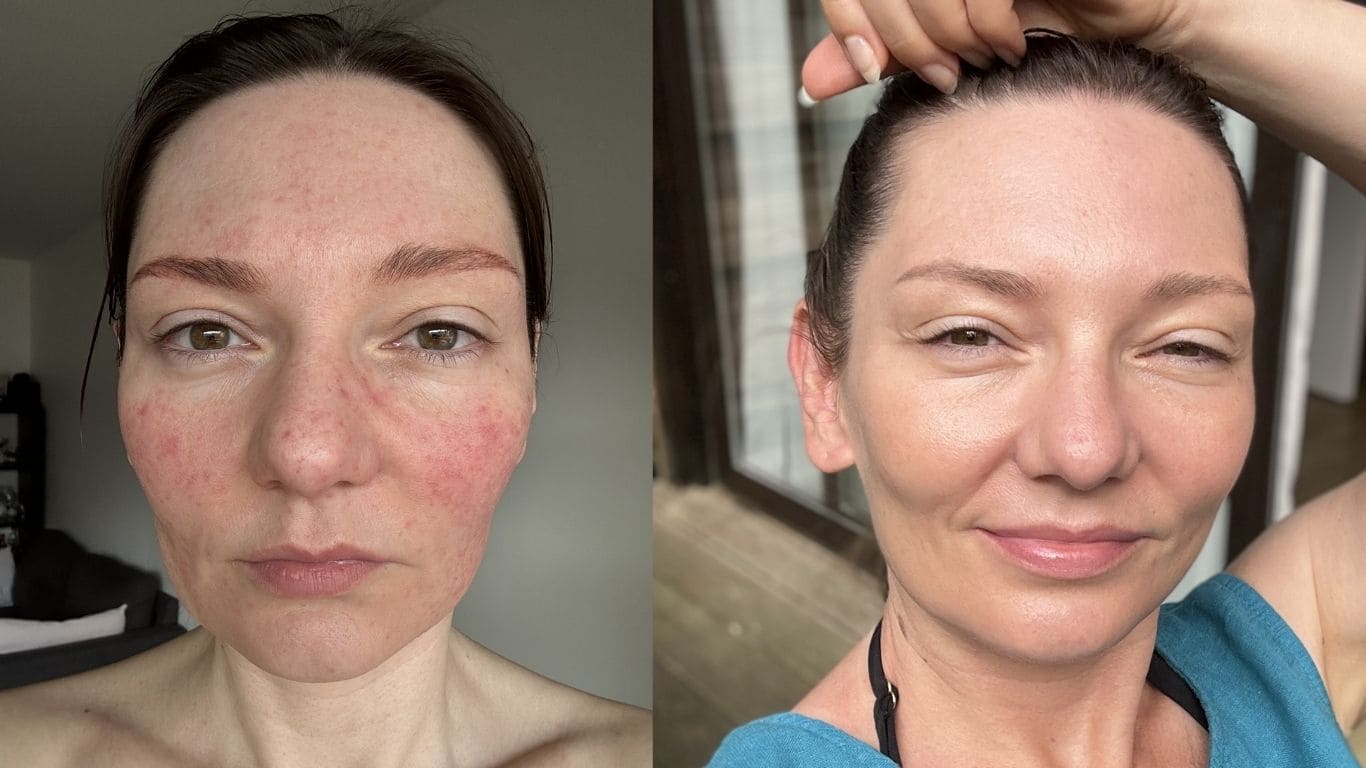
I dealt with rosacea myself, and my treatment centred on a topical azelaic acid cream. In my case, the trigger turned out to be hard water — the redness appeared on my face literally the day after the water pipes in my building were redone. My skin was sore and red, with tiny pustules filled with a clear fluid, as you can see in the photo on the left. The photo on the right shows the result of combining proper skincare with treatment — the two photos are about two months apart. Neither photo has makeup or a filter on it; in the one on the right, the only products on my skin are Serum +Q10 and Cream, which I use every single day.
Cleansing — Without That Stripped, Stinging Feeling
Caring for rosacea-prone skin starts at the cleansing stage, where protecting the hydrolipid barrier should be your first priority. Stick to soap-free, SLES-free formulas that won’t irritate already-reactive skin. Look for products built around non-ionic surfactants — you’ll often find these in dermo-cosmetics designed for babies — since they cleanse effectively without breaking down the skin’s protective layer. Gentle emulsions tend to work best here. Wash your face once, for around 60 seconds, then pat it dry by pressing the towel against your skin rather than rubbing — any friction increases TEWL (transepidermal water loss), which compromises the hydrolipid barrier.
A quick tip:
If you’re dealing with hard water, look for a cleanser containing a chelating agent, such as disodium EDTA. Hard water carries high levels of calcium and magnesium ions, which irritate and dry out the skin, often causing that burning sensation. A chelating agent binds to those calcium and magnesium ions during cleansing, which helps your daily routine calm symptoms faster.
I’ve used — and still use — the Smoothing Cleanser, though it doesn’t contain a chelating agent. If you’re dealing with hard water in particular, CeraVe’s emulsion for dry skin (the one with the green stripe) is a solid alternative, since it does contain one.
Thermal Water Instead of Toner
My favourite is Avène, ideally applied just before your cream. Thanks to its mineral content, it helps speed up skin regeneration for rosacea-prone complexions.
How to Choose a Cream for Rosacea?
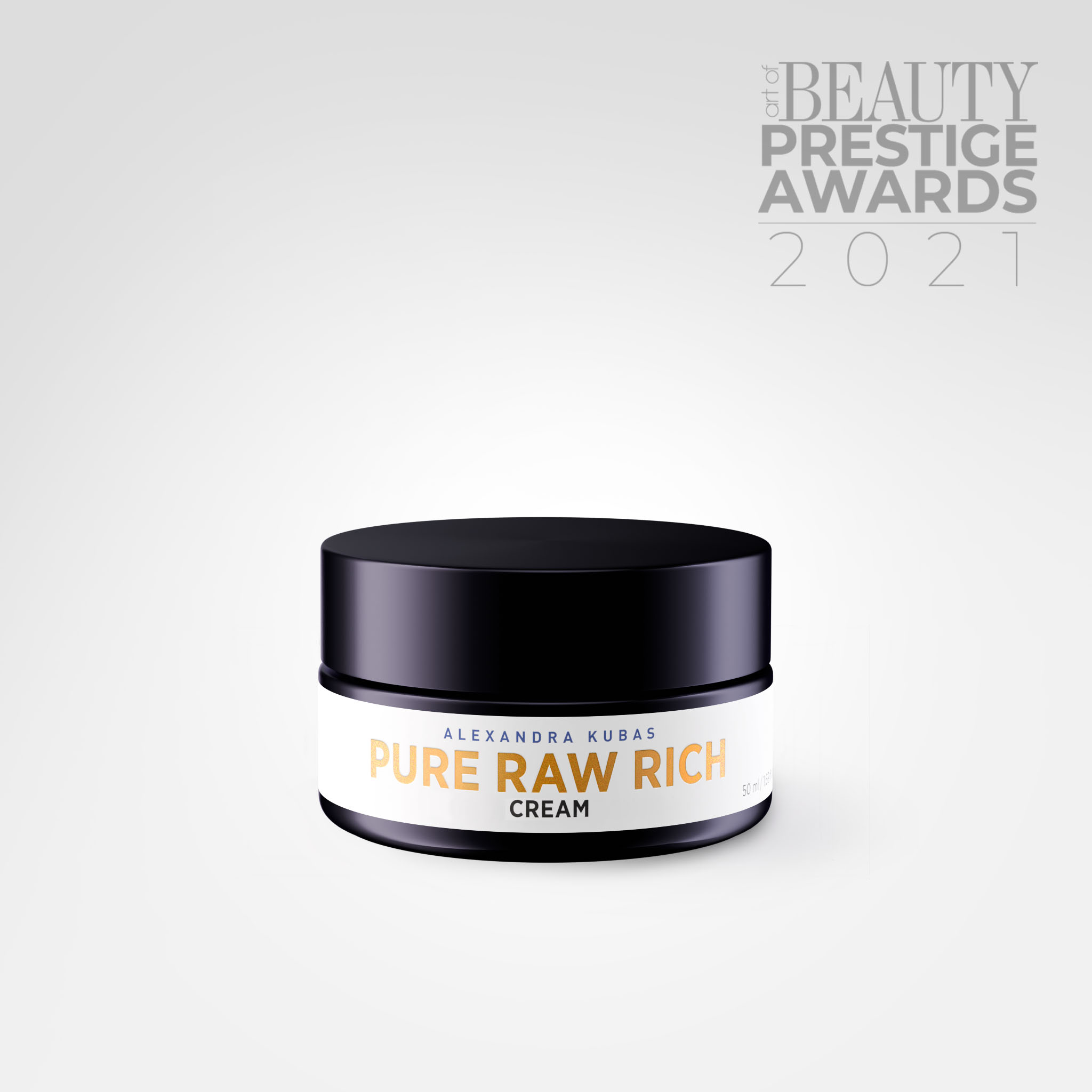
The foundation here is a cream that supports the hydrolipid barrier. Look for ceramides, unsaturated fatty acids (found in liquid oils), panthenol, glycerin and allantoin in the ingredient list. If your skin needs more active support against redness, reach for products containing niacinamide (which calms erythema) or azelaic acid (which works as an anti-inflammatory). In the evenings, I use Skinoren Rosacea, followed by a small amount of Cream applied directly on top. In the mornings, I apply Cream onto skin that’s still damp from thermal water. Cream itself is a hypoallergenic, water-free formula that soothes and protects the skin, supporting its metabolism and speeding up regeneration.
Cream
Soothing and regeneration, without the risk.
A hypoallergenic, minimalist formula that immediately calms irritation and supports the skin’s natural repair processes.
Sun Protection — A Non-Negotiable Step
Sun exposure is the number one trigger for redness, which is why SPF 50+ needs to be part of your routine all year round, not just in summer. Mineral filters — zinc oxide and titanium dioxide — are the safest choice for rosacea-prone skin. They sit on top of the skin and act as a physical barrier, almost like a mirror, reflecting UV rays rather than reacting with the skin itself, which keeps the risk of irritation to a minimum. I personally use a Biarritz sunscreen, and I’m a big fan of their tinted version.
In Summary,
Rosacea is a chronic, inflammatory skin condition that mainly affects fair-skinned adults who are prone to flushing. There’s no complete cure, but the right combination of dermatological treatment, gentle and minimalist skincare, and avoiding your personal triggers — sun, alcohol, spicy food, extreme temperatures — can help you maintain long stretches of remission and noticeably more comfortable skin day to day.
Aleksandra