Free shipping in the EU for orders from 150 EUR.

Men’s Skincare Routine: The Best Products for Your Face, Explained by a Cosmetic Scientist
Published: 04.06.2025 | Updated: 19.10.2026 | Reading time approx. 11 min.
A good men’s skincare routine doesn’t need a shelf full of products – it needs the right ones. Daily shaving, thicker skin and a tendency towards oiliness all place specific demands on men’s skin. In this guide, I’ll walk you through the simple steps and the best skincare for men, explained from a cosmetic scientist’s point of view, so your skin stays healthy and looks fresh.
Have a question about your own skin? Scroll to the end of this article – I’m happy to advise you by email.
Key takeaways
- A daily men’s skincare routine comes down to three things: a gentle cleanser, a nourishing moisturiser and sun protection – all suited to the needs of men’s skin.
- The most common mistakes are skipping moisturiser and using harsh cleansers that dry the skin out. After shaving, products containing allergens irritate skin that is already irritated.
- What works instead: products that don’t strip the skin, help keep sebum in balance and soothe irritation.
Why does men’s skin need its own routine?

Men’s skin and hormones: the science
Men’s and women’s skin differ in structure and in their hormones, and that has a direct impact on how men’s skin should be looked after. Men’s skin is thicker overall – mainly because the dermis, the layer beneath the epidermis, is thicker – and it has a denser network of collagen fibres. That gives it a head start: signs of ageing tend to appear later. Over the years, however, men lose collagen steadily, and this eventually leads to deeper wrinkles.
Testosterone plays a key role. It stimulates the sebaceous glands, so men’s skin produces more sebum than women’s – which raises the risk of blackheads and spots. When sebum production is excessive, it can also upset the skin’s hydrolipid barrier, creating a vicious circle of skin problems.
Daily shaving is a particular challenge. The blade strips away the skin’s natural hydrolipid film – the mix of sebum and sweat that protects the epidermis – together with the outermost layer of skin cells. As a result, the skin loses more water (transepidermal water loss, or TEWL) and becomes more vulnerable to bacteria and pollutants. This shows up as irritation, razor burn and small red spots.
The good news is that the right products make a real difference. Cream supports the skin’s lipid barrier with baobab seed oil and cocoa butter – in an instrumental test, it reduced TEWL by an average of 33% after the very first application. Smoothing Cleanser cleanses without stripping the hydrolipid film and helps minimise irritation, even on very sensitive skin.
Key active ingredients in men’s skincare
Effective skincare comes down to carefully chosen ingredients that answer the specific needs of men’s skin and work together. A good place to start is a serum with coenzyme Q10. Its formula is a concentrated blend of bioactive oils: hemp seed oil (Cannabis Sativa) soothes irritation, black cumin seed oil (Nigella Sativa) calms inflammation-prone skin, and baobab seed oil (Adansonia Digitata) supports the hydrolipid barrier. Copaiba resin and 1% coenzyme Q10 make a powerful anti-ageing duo, while a high content of plant flavonoids brings antioxidant, antibacterial and antifungal properties.
When it comes to moisturisers, unsaturated omega-6 fatty acids are key. They help balance sebum and ease the feeling of tightness, which also makes them ideal for beard care. Omega-6 fatty acids are multitaskers: they rebuild the lipid structure of the epidermis, so they benefit not only your skin but also your hair and nails.
To boost your skin’s metabolism, try a serum with hyaluronic acid or carrageenan. Apply it to slightly damp skin and follow straight away with a rich moisturiser. This creates occlusion – a protective seal that softens the skin and improves its elasticity, hydration and texture. Alternatively, a serum with urea or lactic acid at a low concentration (5% or less) gently removes dead skin cells and evens out skin tone.
Don’t forget antioxidants such as coenzyme Q10 and plant flavonoids, found especially in deeply coloured oils. They work on several levels at once: they support regeneration, soothe irritation, neutralise free radicals and, above all, help slow down the visible signs of ageing. In the end, the secret of effective skincare lies in synergy. Oils such as baobab and black cumin rebuild the lipid barrier, coenzyme Q10 supports collagen, AHA and BHA acids remove dead skin cells, and omega-6 fatty acids keep sebum in balance. Together, they give you more resilient skin with a more even tone and less shine.
Skincare after shaving: how to soothe razor burn
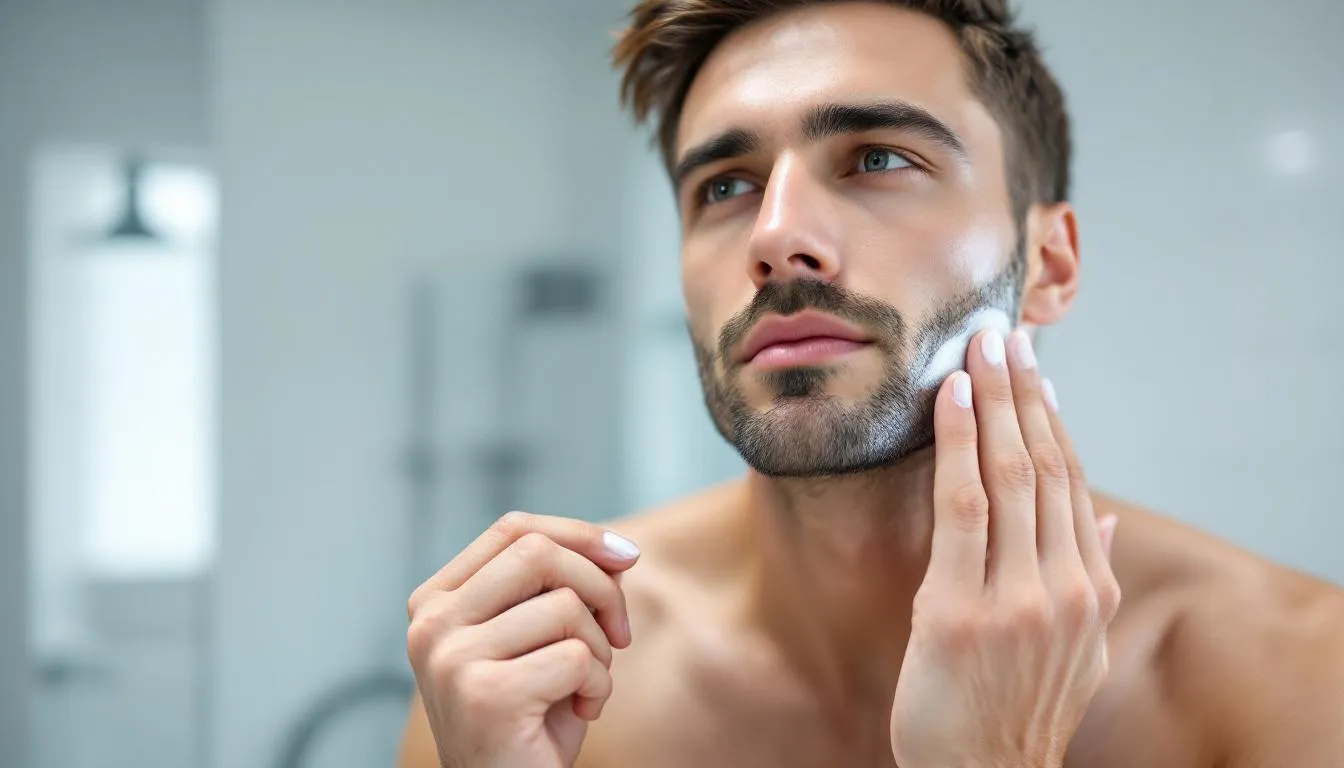
Shaving leaves your skin stripped of its natural lipids. As the blade glides over your face, it removes the outermost layers of the epidermis, which dries the skin out. Dry, irritated skin can no longer do its job of protecting you from the outside world. Not only do cosmetic ingredients penetrate it more easily – so do things we’d rather keep out, such as airborne microbes. That’s why shaved skin so often turns red and develops small, pus-filled spots. It’s also why shaving and aftershave products usually contain soothing, anti-inflammatory ingredients such as panthenol and allantoin (INCI: Panthenol, Allantoin), and often antibacterial ones too.
Razor burn, shaving rash or razor bumps: what’s the difference?
Razor burn (shaving rash) is irritation caused by the blade itself – redness, stinging and tightness that appear within minutes of shaving. Razor bumps are small, sometimes pus-filled spots caused by hairs curling back into the skin (ingrown hairs). If bumps keep coming back, speak to your GP, a pharmacist or a dermatologist.
If you use Smoothing Cleanser, there’s another way to use it after shaving: apply it to irritated skin, leave it on for 2–3 minutes, then rinse. It contains o-cymen-5-ol, a nature-identical preservative (it occurs naturally in plants) with antibacterial, antifungal and antiviral properties that is gentle on the skin. Smoothing Cleanser is free from fragrance allergens, and o-cymen-5-ol is used even in products for newborns.
Why a standard aftershave balm isn’t enough
Look for products that:
- nourish the skin and rebuild its hydrolipid barrier,
- contain soothing ingredients such as shea butter, cocoa butter or allantoin,
- are free from alcohol, which dries and irritates the skin.
Cream is your best ally after shaving:
- Cocoa butter and baobab seed oil form a velvety protective film that quickly soothes irritation and eases stinging.
- Its hypoallergenic formula – dermatologically tested, including an extended patch test on sensitive skin – helps minimise redness, even on sensitive skin.
- In an instrumental test, it reduced transepidermal water loss (TEWL) by an average of 33% after a single application. Well-protected skin recovers faster from tiny razor nicks.
How to use it after shaving
- Rinse your face with cool water.
- Pat your skin dry with a towel.
- Apply Cream – its satin texture isn’t sticky and won’t irritate freshly shaved skin.
Extra tip: if your skin is prone to strong irritation, use Smoothing Cleanser as a mask on freshly shaved skin before your moisturiser and rinse it off after 2–3 minutes – it works as an antibacterial mask for irritation. You can also add Serum + Q10: its flavonoids calm inflammation-prone skin, and coenzyme Q10 supports the renewal of damaged skin.

Skincare Correct Order: The Correct Way of Applying Skincare Products
Conscious and effective skincare is about active ingredients, but also the correct order of applying them. Find out how to do it right
Conscious facial care is based not only on selecting the right active ingredients but also on applying skincare products properly and in the correct order. The order in which skincare products are applied determines their…
How to choose men’s skincare for your skin type

- Oily or acne-prone skin: don’t try to mattify it – help it find its balance instead. Smoothing Cleanser gently exfoliates, while Cream supplies fatty acids and limits water loss, which indirectly helps keep sebum production in balance. In my eight years of working with this formula – including on oily skin – I haven’t seen it clog pores.
- Sensitive skin: choose hypoallergenic formulas. Cream – dermatologically tested, including an extended patch test on sensitive skin – protects and supports regeneration with shea butter and cocoa butter.
Remember: cleansing in the morning is a must – and not with water alone, but with a proper cleanser. By morning, your skin is covered in dust, sebum, sweat, bacteria and mites. Don’t apply moisturiser to skin like that without cleansing it first.
The best products for a daily men’s skincare routine

A simple two-step routine: cleanse, then care
1. Smoothing Cleanser – smart cleansing
Skip harsh, drying face washes and choose this multitasking product with micro-particles (under 100 microns) instead. It:
- effectively removes dirt, sebum and dead skin cells,
- protects the hydrolipid barrier,
- works morning and evening – in the morning, it removes sebum and leftover night cream.
In an instrumental test, it reduced the visibility of pores by an average of 39.4% (I explain what that means in my article on enlarged pores) and improved skin smoothness by an average of 16.8% after 7 days.
2. Cream – moisture without compromise
A hypoallergenic moisturiser with a unique, fluffy texture that:
- helps keep sebum in balance thanks to unsaturated fatty acids,
- forms an invisible protective layer without feeling greasy,
- suits oily, sensitive and acne-prone skin.
In an instrumental test, it improved skin firmness by an average of 75% and hydration by an average of 35% after 4 weeks.
For more intensive care, add Serum + Q10 to this routine. It’s made for skin that needs regeneration: a luxurious formula that not only cares for acne-prone skin but also works as an anti-ageing treatment, visibly smoothing fine lines around the eyes and nasolabial folds. Below are photos from our instrumental test on dry, normal and combination skin: after 6 weeks of use, wrinkle size was reduced by an average of 18.2%.

How to use each product, step by step
1. Smoothing Cleanser (50 ml) – your 3-in-1: face wash, scrub and mask
Apply a pea-sized amount to dry skin (if your skin is dry, use a little more at first). Spread it over your whole face, including around the eyes and mouth, and leave it for 1–2 minutes to soften the skin. Then massage for 60 seconds – and do watch the clock, because a minute is longer than you think! Finally, rinse with lukewarm or, ideally, cool water. Hot water washes lipids out of the skin barrier, while lukewarm or cool water leaves your skin smoother and less tight.
2. Serum + Q10 (30 ml) – optional regenerating boost
After cleansing, gently pat your face dry with a towel, then spritz it with thermal water (Avène is my tried-and-tested recommendation, but you can choose another). Straight away, put 3–4 drops of serum into your palms, rub them together and press onto your damp skin. Massage for 10–15 seconds until the water evaporates – this creates occlusion, which boosts the effect of the active ingredients.
3. Cream (50 ml) – the multitasking must-have
Apply it straight after the serum, while your skin is still damp – this is the key to getting the most out of it. You can also mix both products in your palm before applying, although Cream works brilliantly on its own too. Whichever you choose, massage your face for 10–15 seconds until the water evaporates. After shaving, apply a thicker layer, like a dressing – cocoa butter soothes irritation straight away. You can also use the same cream on your body, wherever your skin needs moisture, firming or smoothing.
Why this routine works
- Smoothing Cleanser cleanses, exfoliates and cares for your skin in one step.
- The ‘serum on damp skin + Cream’ sequence creates an occlusive barrier that improves the absorption of active ingredients.
- Cream’s versatility makes it a practical choice for men who value a minimalist routine.
On shaving days, swap the 60-second massage with Smoothing Cleanser for a 2–3-minute mask – the ingredients will soften the skin and reduce the risk of irritation.
SPF for men: daily sun protection
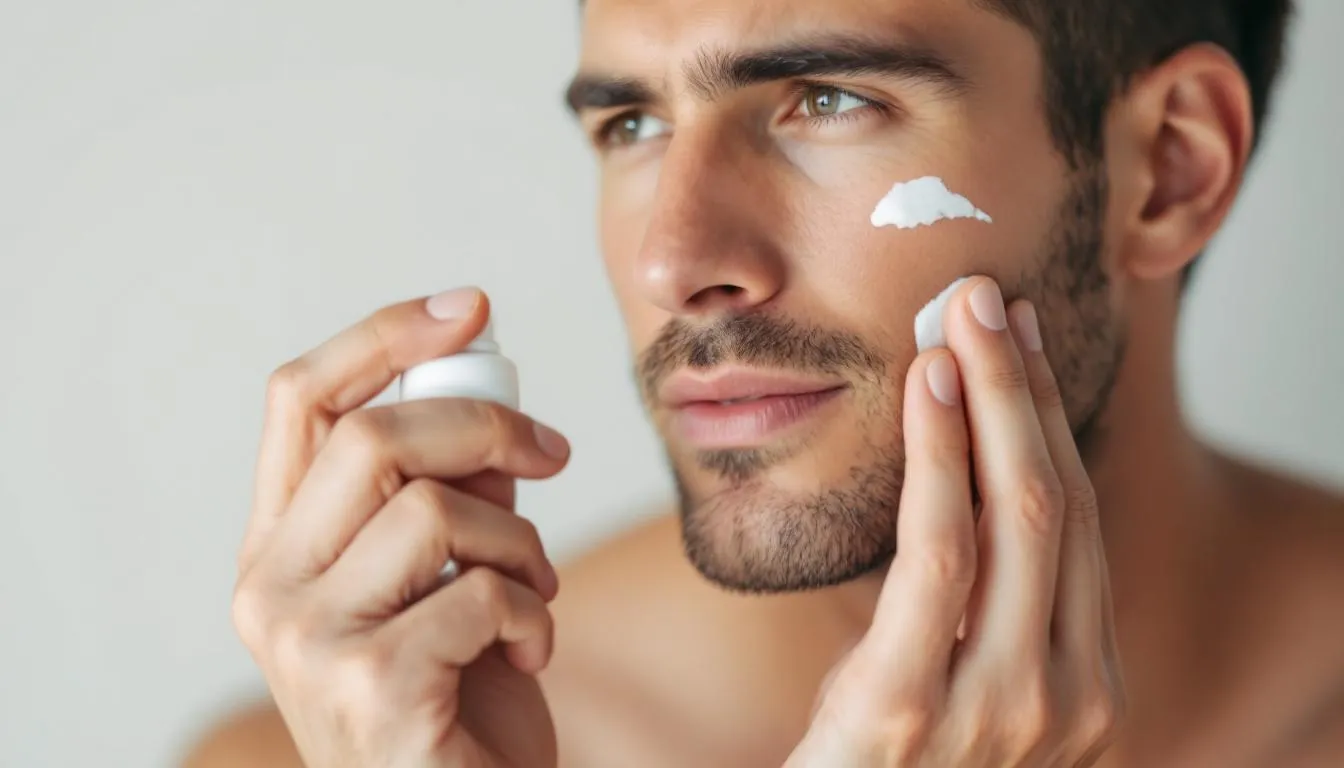
Sun protection should be part of your routine every single day – SPF 30 or higher, reapplied every two hours when you’re outdoors. I understand that suncream isn’t exactly the product men dream of, mostly because of its texture. But there are excellent formulas out there that don’t feel sticky. One of them is Biarritz Crème Solaire Teintée SPF50. You need to choose a shade that matches your skin – although it adds a hint of colour, it isn’t make-up. My husband uses it and is very happy with it. Thanks to fine light-reflecting particles, it leaves the skin with a healthy glow while still looking natural.
Not sure which type of filter to choose? I explain the difference in my guide to mineral vs chemical sunscreen.
Common men’s skincare mistakes
Some habits don’t just make it harder to keep your skin healthy – they can actually make it worse. One of the most common is skipping moisturiser day after day, which inevitably leads to dry skin. Another is using drying face washes – or skipping cleansing in the morning altogether, or washing with water alone.
Regular exfoliation before shaving helps a lot, because it reduces the risk of ingrown hairs and razor bumps, which otherwise lead to persistent irritation. If bumps after shaving keep coming back, see your GP, a pharmacist or a dermatologist, who can recommend the right treatment.
How to shave without irritating your skin
- Shave after a shower, when warm water has already softened your stubble.
- Go with the grain. Shave in the direction your hair grows.
- Don’t press or stretch your skin. Let a sharp blade do the work.
- Rinse the blade after every stroke and replace it every 5–7 shaves. If you get razor bumps, try a razor with fewer blades.
- Finish gently. Rinse with cool water, pat dry and apply Cream straight away.
Discover Pure Raw Rich skincare:

Gentle Gel
500 ml
Gentle cleansing with prebiotics and a chelating agent

Smoothing Cleanser
50 ml
Hydrates, softens and smooths

Cream
50 ml
Supports your skin’s natural regeneration

Serum + Q10
30 ml
Antioxidant serum with omega fatty acids and coenzyme Q10
Summary
A simple path to healthy skin
Men’s skin needs smart care, because its structure – thicker skin and higher sebum production – creates its own challenges. Daily shaving also weakens the skin’s natural hydrolipid barrier, which leads to water loss and irritation.
First, Smoothing Cleanser replaces harsh face washes. It cleanses gently and protects the skin’s lipid film – in an instrumental test, it reduced the visibility of pores by an average of 39.4% after just one week. Second, Serum + Q10 and Cream applied to damp skin create occlusion that improves the absorption of active ingredients. The results are tangible: an average 75% improvement in firmness with Cream after 4 weeks, plus deep regeneration from the serum.
After shaving, Cream works like an instant dressing. Its cocoa butter soothes irritation, and it reduced transepidermal water loss by an average of 33% after a single application. Used as a 2–3-minute mask, Smoothing Cleanser draws on antibacterial o-cymen-5-ol to help prevent spots. Avoid drying products – paradoxically, they make your skin produce more sebum – and don’t skip cleansing in the morning: it removes sebum and leftover night cream before you apply your moisturiser.
In the end, healthy skin isn’t about complicated rituals – it’s about using three tested products consistently. As my husband, who uses the Biarritz SPF, puts it: ‘Even suncream can be comfortable if it doesn’t leave a sticky layer.’ Choose wisely, and your skin will reward you with a healthy look, effortlessly.
If you’d like advice on your own skin, write to me at [email protected] – my skincare consultations by email are free.
Aleksandra Kubas-Maliszewska
Free email consultation
Not sure how to build a skincare routine for your skin? Join the Pure Raw Rich newsletter and get a free email consultation with me.
I’m a cosmetic scientist and the founder of Pure Raw Rich.
Frequently asked questions
Why is men’s skin more prone to acne?
Testosterone stimulates the sebaceous glands, so men’s skin produces more sebum. This makes it oilier and more prone to blackheads and spots.
Should men use a moisturiser every day?
Yes. Every man should moisturise daily to prevent dryness and irritation – and that includes oily skin.
What should a face cream for after shaving contain?
Look for nourishing ingredients that moisturise and support the skin’s regeneration. Choosing hypoallergenic products also reduces the risk of irritation.
Why is sun protection so important?
Every skin type – even thick men’s skin – needs protection from UV radiation, especially after shaving.
Do men need a separate eye cream?
No. Serum + Q10 and Cream are formulated for the eye area too, so you don’t need a separate eye cream.
What is the 4-2-4 cleansing rule, and do you need it?
It’s a trend that suggests cleansing your face for up to ten minutes. You don’t need it: 60 seconds of massage with a gentle cleanser is enough. Cleansing also exfoliates, so washing for longer only irritates the skin and increases water loss (TEWL).